KP people back Governor Rule for durable peace, development
PESHAWAR (APP): The worsening security situation in Khyber Pakhtunkhwa, marked by repeated terrorist attacks on law enforcement personnel and civilians in Kohat, Dera Ismail Khan, Tank, Bannu, Lakki Marwat and merged tribal districts, coupled with an inadequate response by the previous PTI government, has strengthened public support for the imposition of Governor Rule and emergency measures to restore the writ of the state and pave the way for durable peace and development.
The target killing of Shahmshad Akhtar, Director General of the Election Commission of Pakistan, in broad daylight in Tank district, besides a series of militant attacks in different parts of the province in recent months, underscored the gravity of the security challenge and prompted the Federal Government to invoke Articles 232 and 234 of the Constitution for emergency measures in 12 districts and Governor Rule in the province.
The restive areas where emergency imposed include eight districts of the former Federally Administered Tribal Areas (FATA) and four affected settled districts namely Dera Ismail Khan, Bannu, Lakki Marwat and Tank.
“Following the poor anti-terrorism approach of the PTI regime, the Federal Government was left with no other viable option but to take extraordinary constitutional measures to protect the lives and property of the people and restore the writ of the state,” former KP minister Wajid Ali Khan told APP.
He said law enforcement personnel, police officers and civilians had continuously been targeted in the merged tribal districts as well as the above restive settled districts and that adequate institutional capacity had not been developed by PTI rulers to effectively counter the growing threat in KP.
He claimed that the Counter Terrorism Department (CTD) was not sufficiently strengthened and that a forensic laboratory had not been established to provide modern investigative support to law enforcement agencies.
Wajid Ali Khan said that instead of concentrating on containing the spillover of terrorism from the merged districts into settled areas, the former chief minister, Sohail Afridi, had focused on political activities, including a long march from Lakki Marwat.
He alleged that official resources, including a government helicopter, were used during the political activity, while the deteriorating security situation required greater attention and administrative focus.
He welcomed a positive change in the province and said the people of KP were determined to fight terrorism and wanted the menace eliminated permanently.
“Pakistan has paid an enormous price in the war against terrorism,” he said, adding that the country had lost more than 90,000 lives and suffered economic losses exceeding $100 billion over the past decades.
He also referred to the National Action Plan (NAP), formulated after the Army Public School (APS) terrorist attack in Peshawar on December 16, 2014, saying that its effective implementation required collective efforts by all stakeholders.
The APS attack had claimed the lives of 153 people, including 141 students, and injured many others.
He questioned that where about Rs 800 billion funds provided to PTI Govt to combate terrorism had been spent. He said people wanted accountability of the alleged loot and plunder in KP.
Former Inspector General of Police (IGP) Syed Akhtar Ali Shah said KP’s geographical location and its proximity to the Afghan border had made the province particularly vulnerable to terrorism.
He said Pakistan continued to face a serious security threat from militant groups operating from safe havens across the international border in Afghanistan.
Referring to assessments by the United Nations and other independent sources, he said thousands of Tehreek-e-Taliban Pakistan (TTP) militants were believed to be present in Afghanistan, while the overall presence of militant elements in the country was considerably higher.
He said the outlawed TTP had continued to exploit Afghan territory for recruitment, training, facilitation and planning of attacks against Pakistan since the Afghan Taliban Govt returned to power in 2021.
He also referred to the 38th United Nations Monitoring Team report, which, he said, had recorded the relocation of nearly 2,000 TTP militants and their families from border areas to locations deeper inside Afghanistan.
Akhtar Ali Shah said the presence of TTP and other militant groups in Afghanistan and their continued attacks against Pakistan were against commitments made by Taliban regime under the Doha peace agreement.
He said Pakistan could not allow its territory and population to remain exposed to repeated terrorist attacks and therefore had to adopt effective security and diplomatic measures to protect its citizens.
Meanwhile, following the imposition of Governor Rule in KP, an 11-member Advisory Council has been constituted to assist Governor Khyber Pakhtunkhwa Faisal Karim Kundi in running the affairs of the province and started functions.
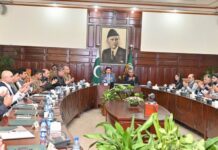
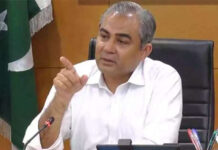
Governor Faisal Karim Kundi on Monday chaired an important meeting of the Provincial Apex Committee at the Governor House, which reaffirmed the state’s resolve to eliminate terrorism, strengthen law enforcement institutions and improve public service delivery throughout the province.
Federal Interior Minister Mohsin Naqvi, members of the Advisory Council, Corps Commander Peshawar, Chief Secretary, Inspector General of Police and other senior civil and military officials attended the meeting.
The meeting began with Fateha for the martyrs who sacrificed their lives for the establishment of peace and in the fight against terrorism, with participants paying tribute to their courage and sacrifices.
The forum comprehensively reviewed the prevailing security situation and discussed measures aimed at the complete eradication of terrorism and establishment of lasting peace in the province.
The committee directed all relevant institutions to adopt coordinated, effective and decisive measures against terrorist elements and reaffirmed that intelligence-based operations would continue with the use of all available resources to improve law and order.
The participants stressed the need to enhance the operational capacity of police and the CTD by providing modern equipment, vehicles, armoured personnel carriers, effective weapons and adequate manpower.
The meeting also recognized that security and development were closely interconnected and that long-standing public issues relating to education, healthcare, employment opportunities and quality of life, particularly in urban and conflict-affected areas, required special attention.
The participants agreed that eliminating terrorism and maintaining peace remained the shared responsibility and top priority of all state institutions, with no compromise on these objectives.
The forum further agreed to accelerate socio-economic development, improve basic facilities in underdeveloped and conflict-affected areas and ensure that essential government services reached citizens at their doorsteps.
It was also decided that public feedback, local needs and community priorities would be incorporated into policymaking and implementation to strengthen public confidence and promote sustainable peace, stability and development.
Talking to APP, retired civil servant Misal Khan and retired primary school teachers Fayaz Khan and Riaz Khan also welcomed the imposition of Governor Rule, expressing hope that the measure would help improve the overall security and administrative situation in the province.
They termed the Federal Government’s decision a timely step aimed at restoring peace, strengthening institutions and creating an environment conducive to socio-economic development.
They said the people of KP had suffered enormously because of terrorism and now wanted effective governance, peace, education, healthcare, employment and basic civic facilities alongside sustained action against militant elements.
They expressed the hope that the new administrative arrangements would focus on strengthening law enforcement institutions, improving governance and addressing the longstanding grievances of people in conflict-affected districts.
The developments, they said, had created renewed expectations that coordinated efforts by federal and provincial institutions would help restore peace and enable Khyber Pakhtunkhwa to move towards a more stable and prosperous future.