Exploring new tourist destinations vital for robust economic development
SWAT, (APP): Amid growing tourist congestion at popular destinations of KP like Swat’s Kalam and Malam Jabba and Mansehra’s Naran and Kaghan, the provincial government is now spotlighting lesser-known but equally breathtaking sites to diversify its tourism portfolio for robust rural economic development.
With traditional tourism sites such as Nathiagali and Thandyani Abbottabad nearing saturation during peak summer seasons in the province, the KP Culture and Tourism Authority pivoted toward unlocking the potential of hidden gems—from the serene Chitral valleys to the untouched beauty of Gabin Jabba, Shahi Bagh in Swat, and Kumrat Dir Upper.
These breathtaking areas, once accessible only to seasoned trekkers and mountaineers of tour groups, are now being developed with eco-friendly infrastructure and modern amenities by increasing the flow of foreign and domestic tourists to northern KP.

In 2024 alone, KP has welcomed over 10 million domestic tourists, driven by interest in the province’s natural beauty, lakes/waterfalls and historical landmarks such as the Gandhara civilization sites, Saiful Malook lake and Trich Mir, the highest peak in the Hindu Kush range in Chitral.
Building on this momentum, the government is expanding its tourism landscape with new projects in northern KP designed to absorb the increasing visitor volume especially during summer.
According to Omair Khattak, GM Investment at KP Tourism Authority, four Integrated Tourism Zones (ITZs) ie Ghanool (Mansehra), Mankiyal (Swat), Madaklasht (Chitral), and Thandiyani (Abbottabad) are planned with World Bank support. Ghanool and Mankiyal are being prioritized as pilot projects, with budgets of Rs5.5 billion and Rs2.9 billion respectively.

“These ITZs, modeled after international benchmarks in Malaysia and Indonesia, will not only boost tourism but expected to reduce tourist load on established hilly stations in KP,” he said.
He informed that these ITZ are expected to generate up to 200,000 direct and indirect job opportunities and attract $2.8 billion in investment.
New facilities have been developed at emerging sites including Larum Top and Shahin Bin Shahi in Lower Dir, Broghal and Sorlaspur in Upper Chitral, and Shangla, Samana (Haripur), and Sulatharn (Swat). Road upgrades and visitor centers are being established to improve accessibility and visitor experience.
Camping pods have also been introduced at scenic locations like Gabeen Jabba, Jazz Banda and Sharan to provide budget-friendly accommodation for families. With daily rates between Rs3,500 to Rs5,000—significantly lower than hotel rates in Naran or Galiyat—these pods offer two to four beds, a washroom, a kitchenette, and security provided by tourism police.
Ten more such pods are set to become operational at various sites including Jargo, Sulatanr (Swat), Broghal Valley, and Kalam, with more in the pipeline.

Plans are underway for three new ski resorts in Kaghan, Chitral, and Swat, alongside the much-anticipated Battakundi-Lalazar chairlift and Dir-Chitral cable car project. Waterfalls like Sajkot, Noori, and Jarogo are being upgraded, while trekking routes and eco-resorts in remote valleys such as Broghal, Kumrat, and Sheikh Badin are also seeing investment.
Dr. Muhammad Naeem, former Chair of Economics at the University of Peshawar, emphasized the economic significance of developing new destinations that not only spreads tourism footfall but revitalizes rural economies and controls price hikes in established areas.

Habib Arif, Director General, KP Tourism and Culture Authority said the government’s Host Tourism Project (HTP) empowers locals by offering interest-free loans of up to Rs3 million through the Bank of Khyber.
Residents can renovate or build rooms for tourist accommodation in areas such as upper Kalam, Kumrat, and Chitral. Special incentives are being extended to women and educated youth to encourage inclusive participation, he said.

“The goal is not just promotion of tourism but rural development,” said Zahid Chan Zab, KP’s tourism advisor. “Through homestays, craft promotion, and community training, we’re making tourism a tool for sustainable rural development.”
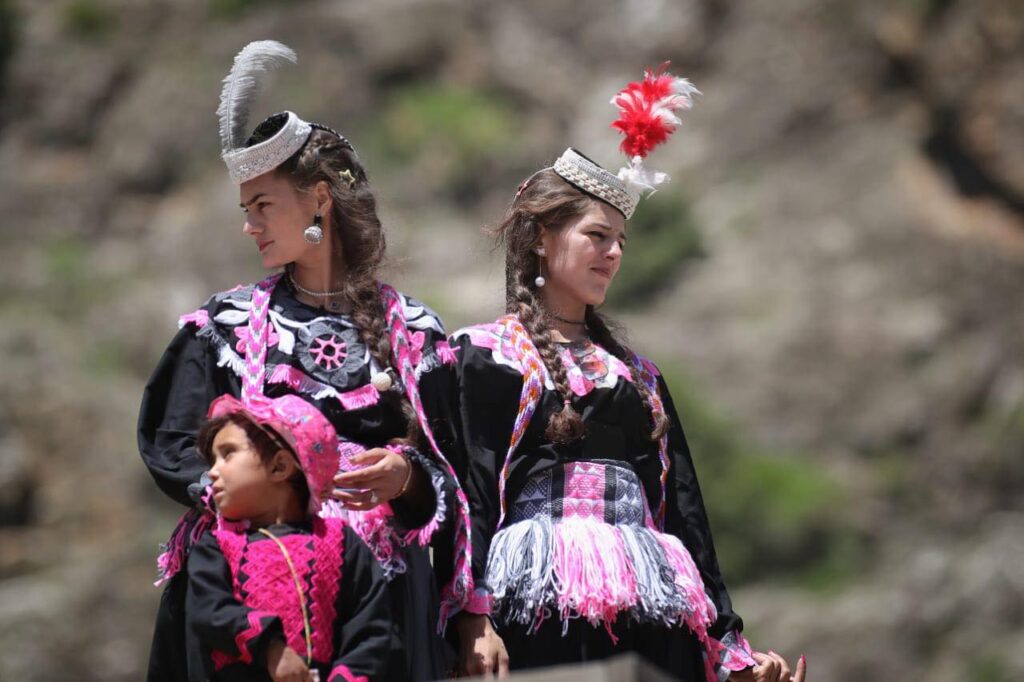
In Chitral, the vibrant Kalash Valleys are experiencing renewed interest due to improved roads and digital marketing of cultural festivals. Similar initiatives are fostering growth in remote Kohistan, where eco-lodges and guided treks now attract nature lovers.
With 2025 declared as Tirich Mir Mountain Year by the KP Govt, the government allocated Rs180 million for the repair of the Kalash Valley road, reinforcing its commitment to mountain tourism.
As KP positions itself as a premier destination for eco-tourism and adventure travel, its focus on responsible development is crucial. International donors, private investors, and local communities are now co-authors of a shared vision where tourism not only entertains but empowers people.
“Kalam’s fresh air and Mahudhand Lake’s tranquility are unmatched,” said Noor Khan, a tourist from Peshawar. “But poor road conditions and hotel prices need urgent attention.”
“Before Kalam visit, I travelled to Kumrat valley where road condition was pathetic and tourists were forced either to hire jeeps on very high rate ie Rs1000 per kilometers while many travelled miles for foot,” he said, adding poor waste management, lack of healthcare services and reduced mobile network make communication difficult for tourists.
However, with key initiatives like ITZs, community homestays, and nature-based tourism projects, KP is redefining the travel experience in Pakistan, offering not just a scenic escape, but a deeper connection to culture, nature, and local livelihoods.