Gaza’s Humanitarian Crisis Deepens as Women and Girls Face Hunger, Displacement and Healthcare Shortages: LIFE for Relief and Development
Thousands of widows and vulnerable women struggle to support their families amid repeated displacement, inadequate shelter and deteriorating living conditions
GHAZA: The humanitarian crisis in the Gaza Strip continues to take a devastating toll on women and girls, with thousands of widows and female-headed households struggling to survive amid widespread displacement, food shortages, inadequate shelter and the collapse of essential healthcare services.
The consequences of the war extend far beyond the loss of lives, leaving hundreds of thousands of women responsible for supporting their families, raising children and securing basic necessities under increasingly difficult circumstances.
According to UN Women, more than 38,000 women and girls have been killed in Gaza since October 2023, while approximately 11,700 have sustained severe injuries resulting in lifelong disabilities. A further 172,202 women and girls were reported injured in UN Women’s 2025 humanitarian update. The situation has created long-term challenges for survivors and their families, particularly amid limited access to medical treatment, rehabilitation and specialized healthcare.
The scale of the crisis is also reflected in the growing number of female-headed households. UN Women estimates that approximately 86,290 households in Gaza are now headed by women, nearly one in four households, placing an enormous burden on women who must provide for and protect their families without adequate financial or social support.
Highlighting these challenges, LIFE for Relief and Development, an international humanitarian organization working in Palestine, has emphasized the urgent need to protect and support vulnerable women, particularly widows, orphaned children, pregnant and breastfeeding mothers, older women and persons with disabilities.
Vicki Roob, Director of International Affairs at LIFE for Relief and Development, said the humanitarian crisis had fundamentally changed family structures in Gaza, with women increasingly assuming the responsibility of providing for their households.
According to Roob, these responsibilities go beyond securing food and meeting daily necessities. Women must also find shelter, protect their children, ensure their education and look after their physical and psychological well-being, often without any stable source of income.
Abu Suhaib, LIFE’s Office Director in the Gaza Strip, said the organization had prioritized women in its humanitarian response since the beginning of the war, particularly widows and those without family members capable of supporting them.
He said LIFE had established nine organized camps across northern, central and southern Gaza, providing shelter to 62,000 families through insulated tents designed to offer protection against extreme summer temperatures, winter cold, rain and flooding. The camps were also designed to accommodate families facing repeated displacement.
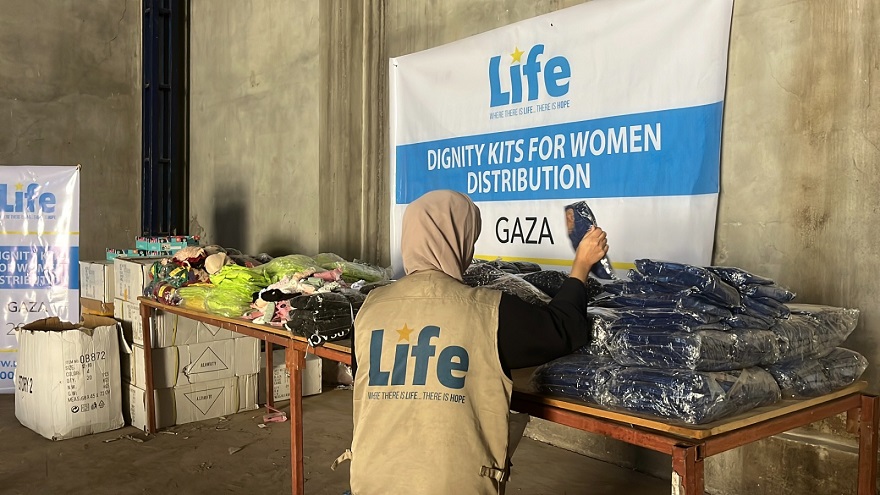
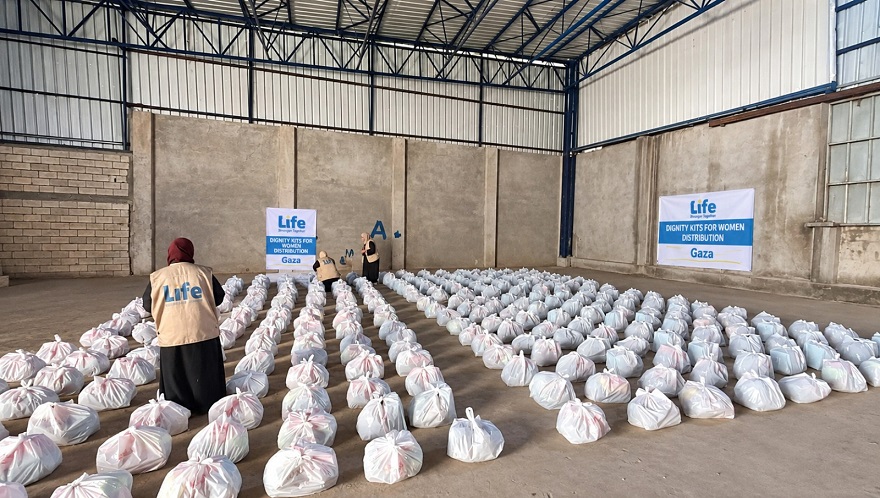
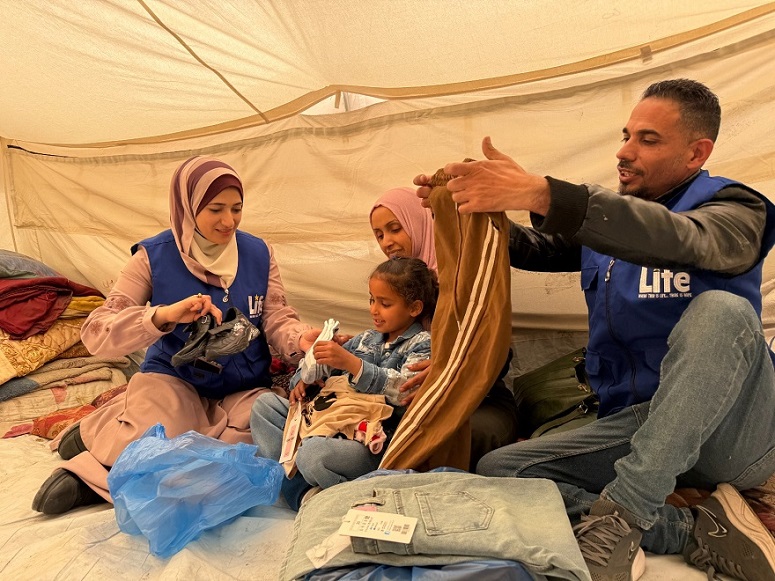
According to Abu Suhaib, the camps include restroom facilities to ensure the safety and privacy of women and girls, while dignity kits and food parcels have also been distributed among displaced families.
He added that LIFE’s relief operations include the provision of ready-to-eat meals, meat, canned food, drinking water, water tanks, medicines and medical supplies to hospitals throughout the Gaza Strip.
The organization is also supporting women caring for orphaned children through shopping vouchers for essential needs, educational assistance, winter clothing and heating supplies. Families living outside the camps are also receiving assistance to protect themselves from extreme heat, insects and rainwater.
Solar energy systems and fuel-powered generators are being provided to facilitate medical examinations and healthcare services for women and children.
Pregnant and Breastfeeding Women Face Growing Health Risks
The deteriorating healthcare situation has placed pregnant and breastfeeding women among the most vulnerable groups in Gaza.
Dr. Amal Al-Sharabi, an obstetrician and gynecologist working at a hospital in central Gaza, said damage to medical facilities, shortages of medicines and medical supplies, and difficulties reaching hospitals had significantly increased health risks for mothers.
She said pregnant women were facing malnutrition, anemia, high blood pressure, bleeding and infections, while access to routine pregnancy monitoring, safe childbirth facilities and postpartum healthcare remained severely restricted.
Dr. Al-Sharabi further reported that more than 3,950 miscarriages had been recorded during the period covered by the organization’s information, while the rate of cesarean deliveries had reached 49.2%.
She said the challenges continued even after childbirth, as mothers struggled to obtain adequate nutrition, postpartum medical care and essential supplies for newborns, further increasing their physical and psychological distress.
Food insecurity has also become a major concern. UN Women estimated that approximately 790,000 women and girls were experiencing crisis-level food insecurity or worse in its 2025 humanitarian update. Its later projections for July–December 2026 put the figure at approximately 702,000.
Many mothers are reportedly reducing their own food consumption or sacrificing their portions to ensure that their children have something to eat. Shortages of safe drinking water, cooking fuel and facilities for preparing meals have further complicated daily life, particularly in overcrowded displacement camps.
To address these needs, LIFE has been providing pregnant women with vitamin-fortified food and essential medicines. Breastfeeding mothers are also receiving fortified infant formula and other necessary supplies for their babies.
Menstrual Hygiene and Sanitation Remain Major Challenges
Beyond hunger and inadequate shelter, access to menstrual hygiene products and sanitation facilities remains another serious but often overlooked aspect of the humanitarian crisis.
Fatima, a volunteer with LIFE’s Gaza team, said approximately 700,000 women and girls were facing difficulties managing their menstrual hygiene needs because of shortages of sanitary pads, clean water and suitable bathing and toilet facilities.
She said overcrowded shelters and displacement camps offered little privacy, forcing many women and girls to restrict their water consumption or adjust the times they used sanitation facilities to avoid overcrowding and unsafe conditions.
These circumstances threaten women’s health and dignity while limiting their ability to carry out daily activities safely and normally. Women and girls also face difficulties accessing assistance and moving around displacement sites without fear or discomfort.
Fatima identified women with disabilities, older women, pregnant and breastfeeding mothers, adolescent girls and those living without family support as particularly vulnerable to these conditions.
Women with Disabilities and Older People Face Additional Hardships
Turkish human rights activist Hanan Al-Tatar said the effects of war were particularly severe for women with disabilities and older women, who faced additional obstacles in accessing humanitarian assistance, healthcare and basic facilities.
She explained that women using wheelchairs often struggled to reach toilets, food distribution points and water supplies, while older women frequently required regular medication, medical attention and assistance with everyday activities.
Women who had sustained permanent disabilities during the war faced further difficulties in obtaining rehabilitation, treatment and assistive devices. Many also struggled to return to work or regain their economic independence.
Al-Tatar stressed that humanitarian assistance should go beyond the general distribution of food and essential supplies and must address the specific needs of women and girls according to their age, health conditions, physical abilities and family circumstances.
Personal Stories Reflect the Human Cost of the Crisis
The scale of suffering is perhaps most evident in the experiences of women struggling to keep their families alive amid repeated displacement and the loss of loved ones.
Shireen, a mother of nine, described how the war had transformed her life after the death of her husband, sister and brother-in-law.
“Before the war, I lived a comfortable life with my husband. Suddenly, after losing him, as well as my sister and her husband, I became responsible for all these children,” she said.
She explained that women in her area faced serious difficulties moving around freely to earn a living, while leaving young children alone to seek humanitarian assistance was another major concern.
Repeated displacement had left her physically exhausted and emotionally distressed. However, she said receiving food parcels had helped preserve her dignity and spared her from having to beg for food to feed the orphaned children.
Sara, a 22-year-old woman responsible for supporting her parents and six orphaned children, described a similar struggle.
“Every day, I struggle to provide the basic necessities needed simply to keep my family alive. I live with the constant fear that I may be unable to protect them from hunger or cold, and I have no one to turn to for help,” she said.
She added that receiving a tent at one of LIFE’s camps had finally given her a sense of safety and reassurance after prolonged uncertainty and displacement.
Another beneficiary, Fadwa, said living in a LIFE camp had helped her regain a measure of dignity, but emphasized that women living outside the camps continued to face enormous difficulties.
She called for greater access to medicines, medical supplies, pregnancy monitoring, safe childbirth facilities and postpartum healthcare, along with treatment for anemia and malnutrition and adequate nutrition for pregnant and breastfeeding women and children.
She also stressed the importance of distributing sanitary pads, personal hygiene products and underwear, while ensuring access to clean water, bathing facilities and safe toilets that guarantee privacy.
With winter bringing additional hardship, Fadwa said suitable shelters, tents and blankets were urgently needed, along with safe spaces to protect women and girls from violence and exploitation.
She further called for expanded psychological and social support services for women, mothers and children, emergency cash assistance for female-headed households, and employment opportunities and small-scale projects to strengthen women’s economic independence.
Ensuring that girls can return to education and have access to safe learning environments was equally important, she added.
The accounts of these women underline the urgent need for sustained humanitarian assistance in Gaza, particularly for families headed by women and those caring for orphaned children. Beyond immediate relief, access to healthcare, education, safe shelter, clean water and opportunities for economic independence remains essential to restoring dignity and helping vulnerable women rebuild their lives.
LIFE for Relief and Development says it will continue its humanitarian efforts to support affected families and address the growing needs of women and children across the Gaza Strip.