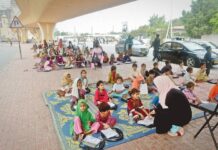
Education in Gilgit-Baltistan and Chitral: Challenges and the Way Forward – By: Sultan Alam
Education transcends its status as a fundamental human right; it operates as the foundational catalyst for socio-economic mobility, institutional development, and sustained community empowerment. Although Pakistan has recorded measurable progress in broadening nominal access to schooling over recent decades, profound systemic disparities in pedagogical quality, resource allocation, and educational equity persist, most acutely within geographically isolated and topographically marginalized territories.
Nowhere is this structural vulnerability more pronounced than in the high-altitude regions of Gilgit-Baltistan and Chitral. Characterized by rugged, precipitous terrain, widely dispersed rural settlements, and prolonged, severe winter climates, these territories present a uniquely fractured educational landscape. For children residing in remote valleys, the routine pursuit of formal schooling requires navigating environmental and logistical hazards largely absent from the urban educational experience. Consequently, substantive educational reform cannot be reduced to quantitative metrics such as the construction of physical school buildings. Instead, the overarching policy imperative must pivot toward establishing resilient, inclusive, and high-caliber learning ecosystems capable of delivering equitable outcomes regardless of a student’s geographic isolation, socio-economic background, or gender.
The physical topography of Gilgit-Baltistan and Chitral acts as a primary structural bottleneck to sustained literacy and academic progression. Precarious, unpaved road networks, recurrent seasonal landslides, glacial lake outburst floods, and sub-zero temperatures frequently sever transportation corridors, resulting in chronic student absenteeism and disrupted academic calendars. Longitudinal empirical evaluations, most notably the Alif Ailaan Pakistan District Education Rankings, have consistently underscored the stark divergence between relatively encouraging primary enrollment rates and severely deficient school infrastructure indices across these northern districts. Because middle and secondary institutions remain heavily centralized within semi-urban hubs, students face prohibitive commuting distances upon completing primary school, precipitating a sharp attrition crisis during the critical primary-to-secondary transition.
Compounding this physical isolation is a chronic human capital deficit. Recruiting, deploying, and retaining qualified, professionally credentialed educators in far-flung settlements remains an enduring administrative challenge. Deterrents such as inadequate residential facilities, harsh climatic living conditions and professional isolation challenge teachers to accept rural postings. As a direct consequence, remote primary schools frequently operate with severe staffing shortages, compelling one or two educators to manage complex multi-grade classrooms simultaneously. This structural arrangement substantially dilutes individualized pedagogical instruction, compromises classroom management, and undermines the academic rigor necessary to cultivate foundational cognitive and analytical competencies.
These infrastructural and human resource constraints intersect disproportionately with entrenched gender disparities. Socio-educational research on regional marginalization consistently demonstrates that the absence of basic, functional amenities, specifically boundary walls, potable water, and gender-segregated sanitation facilities act as a decisive deterrent to the continued enrollment of adolescent girls. When these institutional inadequacies are compounded by physical safety concerns along protracted mountain commutes and an acute shortage of local female educators, conservative and risk-averse rural households frequently withdraw their daughters from formal schooling at the onset of adolescence.
From a statutory perspective, the insertion of Article 25-A into the Constitution of Pakistan via the Eighteenth Amendment legally obligates the State to provide free and compulsory education to all children between the ages of five and sixteen. However, across the mountainous north, the translation of this constitutional mandate into tangible administrative reality remains uneven and under-resourced. Furthermore, while modern Information and Communication Technologies (ICT) offer a theoretical mechanism to bridge geographic chasms through distance learning, regional assessments reveal an entrenched digital divide. Unreliable broadband connectivity, chronic electrical grid failures, and a lack of digital literacy training among rural faculty prevent isolated schools from integrating virtual pedagogical tools, thereby exacerbating the educational marginalization of remote student populations.
Rectifying these multifaceted inequities necessitates a comprehensive, context-sensitive policy framework that aligns state intervention with local geographic and socio-cultural realities. First, provincial and regional education departments must transition toward data-driven infrastructure planning, prioritizing the strategic upgrading of existing primary schools to middle and secondary levels based on demographic mapping, alongside the establishment of regulated, safe residential boarding facilities where extreme terrain precludes daily commuting. Second, stabilizing the rural teaching workforce requires institutionalizing a transparent, needs-based teacher deployment and transfer policy, reinforced by competitive hardship allowances, subsidized housing, and localized continuous professional development networks.
Third, safeguarding and advancing female educational attainment demands targeted gender-responsive interventions, including the provision of secure, state-subsidized student transportation, accelerated recruitment of local female teachers, and sustained community mobilization campaigns led in partnership with respected local elders and religious leaders to shift cultural norms. Finally, to avoid persistent grid and connectivity failures, technological integration must be prioritized, sustainable solutions, specifically solar-powered computer laboratories paired with localized, offline digital content repositories. Ultimately, the efficacy of educational governance in Gilgit-Baltistan and Chitral must not be evaluated by superficial enrollment statistics, but by its demonstrated capacity to deliver resilient, equitable, and transformative learning opportunities to every child across the mountain frontier.
By: Sultan Alam,
Senior Instructor, AKUIED-PDCN