Unearthing opportunity: KP’s mineral resources as a catalyst for economic growth
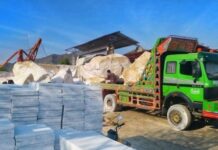
PESHAWAR (APP): Amid the constant clatter of marble-cutting machines on the congested Warsak Road in Peshawar, 35-year-old Faraz Khan works against time, transforming massive blocks of raw marble into polished slabs for an ever-growing construction market in Khyber Pakhtunkhwa.
Assisted by three labourers at his modest three-room marble factory with scattered large slabs, Faraz unloads Ziarat marble stones transported from Mohmand district through trucks before converting it into attractive marketable products used in homes, offices and commercial buildings.
For this young entrepreneur, every polished slab represents much more than a piece of stone rather it symbolizes a source of livelihood, an opportunity to create employment and a chance to become part of the country’s growing industrial and construction sectors.
His journey into the marble business, however, began not with commercial ambition but with the struggle to overcome unemployment and poverty. “I entered this painstaking profession as a labourer in 2016 after facing years of unemployment. My fortunes changed last year when I established my own marble unit, and I have never looked back,” he told APP on Sunday while bringing raw marble slabs to saw machine.
Describing marble and granite processing as promising business opportunities for young people to invest, Faraz said the sector could offer attractive returns to investors equipped with technical knowledge, sufficient capital and effective marketing skills, particularly amid the growing demand for construction materials in KP and Punjab provinces.
He said Ziarat super white marble remained particularly popular among consumers of these provinces because of its shine, durability and cooling properties, while white, grey and red-white varieties from Mohmand, Swat and Buner districts were also gaining popularity in domestic markets.
However, behind the activity of small marble-processing units lies a much bigger economic opportunity that Khyber Pakhtunkhwa has yet to fully realise and transforming its enormous underground mineral wealth into a powerful engine of industrialisation, employment generation and export-led economic growth.
Blessed with extensive deposits of marble, granite, chromite, copper, limestone, coal, gemstones, quartz, silica sand and several other precious and industrial minerals, KP possesses the natural resources needed to emerge as one of Pakistan’s leading mining, mineral-processing and gemstone-exporting destinations.
From the mineral-rich mountains of Waziristan, Bajaur and Mohmand to the emerald-bearing valleys of Swat and the gemstone deposits of Kohistan, the province’s geological landscape offers immense opportunities for investors, industrialists, skilled workers and local communities.
Experts strongly believed that systematic exploration, scientific extraction and modern processing of these resources could generate billions of rupees in revenue, attract domestic and foreign investment, create thousands of direct and indirect jobs and significantly strengthen Pakistan’s industrial and export base.
Yet, despite this enormous potential, the mineral sector remains largely underdeveloped. Traditional extraction techniques, inadequate infrastructure, limited investment, expensive machinery, energy constraints, weak regulatory oversight and insufficient value addition continue to prevent the province from obtaining maximum economic returns from its natural resources.
The consequences are visible across the mining and processing chain, where substantial quantities of valuable raw material are wasted before reaching the market, while local businesses struggle with rising production costs and limited access to modern technology.
Riaz Khan, a marble buyer from Nowshera at Warsak Road, told APP that rising prices of two-foot white marble slabs had placed quality construction material beyond the purchasing power of many poor and lower-middle-income households and regulating its prices was need of the hour.
He stressed the need for a transparent pricing mechanism and effective government regulation to discourage profiteering, protect consumers and ensure that the benefits of increased production were passed on to ordinary people.
At the industry level, Sher Bandi Marwat, President of the Frontier Mine Owners Association, said Pakistan possessed enormous mineral reserves, with Khyber Pakhtunkhwa holding a particularly significant share of the country’s marble resources.
Citing industry estimates, he said Pakistan had over 2,900 million tons of marble reserves, around 75 percent of which were located in KP, highlighting the province’s deposits of emerald, feldspar, granite, limestone, quartz, silica sand and soapstone.
However, he regretted that outdated extraction practices in KP were causing substantial financial losses to the mining industry.
“Nearly six out of every 15 marble slabs are wasted because of blasting at mining sites in KP,” he said, explaining that indiscriminate blasting damaged valuable stone and reduced the quantity of commercially usable material.
He said the absence of modern machinery, professional training and technical expertise was undermining the competitiveness of the province’s mining and gemstone industries.
Heavy taxation, expensive imported equipment and high electricity costs were further discouraging mechanisation and investment, ultimately affecting production efficiency and the country’s export potential, he added.
Beyond technological and financial constraints, weak governance and alleged illegal extraction in the past have emerged as major challenges confronting the mineral sector in KP.
Adviser to the Governor of Khyber Pakhtunkhwa on Information and Public Relations Samar Haroon Bilour recently raised serious concerns over alleged large-scale illegal placer gold mining in the province, claiming that heavy machinery and thousands of workers were involved in unlawful extraction activities during the tenure of the previous PTI government.
She said gold mining contracts worth Rs4 billion, awarded in 2024, were suspended in 2025 following an inquiry by the National Accountability Bureau (NAB). Despite the suspension, she alleged that illegal mining continued in several areas, causing substantial financial losses to the provincial exchequer.
Samar Bilour said Governor Faisal Karim Kundi had constituted a Joint Investigation Team, headed by a retired High Court judge, to investigate the alleged irregularities, identify those responsible and recommend appropriate legal action.
“The government wants to bring all those involved in illegal mining before the courts of law,” she said, adding that efforts would also be made to recover financial losses caused to the national exchequer.
The controversy has once again highlighted the importance of transparent licensing procedures, effective monitoring, institutional accountability and strict enforcement of mining regulations to ensure that public resources benefit the province and its people rather than a handful of influential individuals.
Industry representatives believed that without a credible regulatory framework and consistent enforcement, even the most promising mineral-development policies would struggle to deliver sustainable economic benefits.
The gemstone industry presents another promising avenue for economic diversification and foreign exchange generation and time has come to prevent its unlawful transportation.
Yousaf Sarwar, former President of the Sarhad Chamber of Commerce and Industry (SCCI), said the mines and minerals sector had suffered because of inconsistent and inadequate policies of successive governments.
He observed that the gemstone sector remained largely untapped despite Khyber Pakhtunkhwa being home to rare and internationally sought-after varieties, including Swat emerald, Mardan topaz, Mohmand nephrite and Kohistan peridot.
He regretted that the province, despite possessing some of the world’s finest gemstone deposits, had failed to establish an effective processing and export chain capable of competing in international markets.
Mamoor Khan, Patron-in-Chief of the All Pakistan Commercial Exporters Association (APCEA), said Pakistan had the potential to export approximately 800,000 carats of ruby, 87,000 carats of emerald and five million carats of peridot annually.
He said these valuable resources were being wasted because of illegal mining, indiscriminate extraction through explosives and inadequate processing facilities.
According to him, raw gemstones from the region were traded in international markets, including China, Afghanistan, the United States, Belgium and the United Kingdom, but the country was unable to capture their full commercial value because of smuggling and a lack of modern cutting, polishing and certification facilities.
Mamoor Khan estimated that Pakistan’s gemstone industry had an export potential of around US$32 billion, stressing that modern technology, internationally recognised certification systems, skilled manpower and institutional support were essential to realise this opportunity.
He urged the government to grant Namak Mandi gemstone market in Peshawar the status of an industrial hub and equip it with modern cutting, polishing, grading, testing and certification facilities.
Such an initiative, he said, could transform Peshawar into a regional gemstone-processing and trading centre, attracting international buyers and providing new employment opportunities to artisans, traders and skilled workers.
Dr Yousaf Sarwar said the contribution of the mineral sector to the provincial economy remained disproportionately low compared with its enormous resource base.
He called for interest-free financing facilities for miners, reduced duties and taxes on imported machinery and affordable electricity to encourage mechanised extraction, establish local processing industries and improve the competitiveness of Pakistani mineral products.
He said the government needed to move beyond the conventional approach of granting mining leases and focus on developing an integrated mineral economy, where extraction, processing, manufacturing and exports were linked through a well-organised industrial chain.
Experts believed that establishing processing industries close to mining sites could substantially reduce transportation costs, minimise wastage and generate additional employment in remote districts, where economic opportunities are often limited.
They also emphasise that local value addition would enable Pakistan to earn significantly more from its mineral resources instead of exporting raw materials at comparatively low prices and importing expensive finished products.
Meanwhile, officials said the provincial government was undertaking several initiatives to improve mineral exploration, attract investment and modernise the mining sector.
Approximately 82 million tons of coal reserves had been identified in Hangu and Orakzai, including nine million tons of developed reserves, while significant chromite deposits existed in Shangla and Swat.
They said that mineral and gemstone leases, including an emerald lease in Swat, had generated investment and revenue opportunities, while the province collects limited revenue from minerals, mines and gemstones.
To facilitate investors and improve transparency, a Mining Cadastre Portal had been introduced, while geological mapping of mineral-rich areas was being carried out in collaboration with the Geological Survey of Pakistan.
Officials said geological mapping of around 30 percent of the province, including parts of Chitral, Orakzai and Kurram, had been completed, with surveys of the remaining areas planned in subsequent phases.
The initiative is expected to provide more reliable geological information to prospective investors, reduce uncertainty surrounding mineral exploration and help identify commercially viable deposits.
The government’s development plans also include establishing a gemstone laboratory, a technical training and certification centre, strengthening mineral-testing laboratories and setting up a mineral complex in Hayatabad, Peshawar.
The proposed complex is intended to provide one-window facilities, technical assistance and consultancy services to investors, helping them navigate regulatory procedures and explore business opportunities in the province.
Officials said plans were also under consideration to establish a Mineral Development and Management Company, open additional regional offices and strengthen enforcement against illegal extraction. Samar Bilour said cases would be registered against individuals involved in unlawful mining activities.
The development of specialised marble-processing zones is another important component of the province’s strategy to promote mineral-based industrialisation.
Mohmand marble city is being developed over 350 acres, while a similar project is planned in Buner, two districts possessing considerable marble resources and potential for investment in processing and manufacturing.
More than 28 industrial units have reportedly started production in Marble City Risalpur, reflecting growing interest in organised marble-processing facilities.
Similarly, designated areas in Rashakai and Nowshera Special Economic Zones are expected to accommodate marble and mineral-related industries, creating opportunities for investors to establish modern production units and expand their businesses.
The proposed relocation of marble-processing units from Warsak Road to nearby industrial zones is also aimed at addressing environmental concerns, particularly dust pollution and the deteriorating working conditions associated with marble cutting in densely populated urban areas.
For local residents, the relocation could mean cleaner surroundings, while industrialists would benefit from better infrastructure, organised production facilities and improved opportunities for expansion.
For entrepreneurs such as Faraz Khan, the real success of these initiatives will not be measured merely by the number of mining leases issued, production targets achieved or revenue collected by the government.
It will be reflected in better machinery at small factories, reduced wastage of valuable stones, safer working conditions, stopping its smuggling, regular employment for labourers and opportunities for local entrepreneurs to transform modest businesses into competitive industrial enterprises.
The province needs a comprehensive approach that connects mineral exploration with processing, manufacturing, marketing and exports.
Affordable financing, modern technology, skilled manpower, reliable electricity and investor-friendly policies must become integral parts of this transformation.
Equally important is ensuring that mining communities receive a fair share of the economic benefits generated from resources extracted from their land.
Investment in local infrastructure, healthcare, education and vocational training can help translate mineral wealth into meaningful improvements in people’s lives.
Environmental sustainability must also remain a central consideration. Unregulated blasting, excessive excavation and improper disposal of mining waste can damage forests, contaminate water resources, disturb mountain ecosystems and expose nearby communities to serious environmental and health risks.
Responsible mining practices, environmental assessments, rehabilitation of exhausted mining sites and effective monitoring are therefore essential to ensure that economic development does not come at the expense of future generations.
With transparent policies, accountable institutions, scientific exploration, modern technology and consistent public-private sector collaboration, Khyber Pakhtunkhwa can transform its underground mineral treasures into a sustainable source of economic prosperity.
For a young entrepreneur working beside marble-cutting machines on Warsak Road, that transformation is much more than an ambitious government development plan. It represents the possibility of expanding his business, providing employment to more young people and building a secure future through the resources beneath his own soil.
Faraz’s story reflects the aspirations of thousands of miners, labourers, traders and small entrepreneurs who believe that the mountains of Khyber Pakhtunkhwa hold the promise of a better tomorrow.
The real opportunity lies not simply in extracting what is buried beneath the earth, but in creating an economic system that turns those natural resources into industries, livelihoods, exports and lasting prosperity for generations to come.