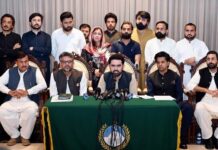
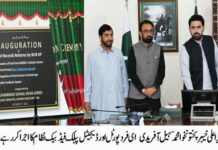
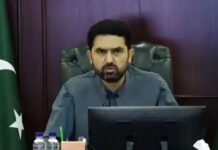
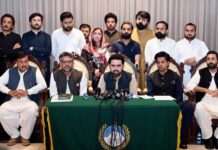
For success of Govt-PTI talks, CM KP urged to withdraw October 4 long march call
PESHAWAR (APP): Political observers and experts on Friday urged Khyber Pakhtunkhwa Chief Minister Sohail Afridi to withdraw the October 4 long march call to create a conducive environment for the ongoing talks between the government and PTI representatives and enable all outstanding issues to be resolved through dialogue and constitutional forums.
They said that at a time when the province was confronting serious challenges related to terrorism, governance, unemployment, financial management and public service delivery, political confrontation and uncalled for mass mobilisation could further complicate the situation in Khyber Pakhtunkhwa.
They stressed that the success of the government-PTI dialogue process required political restraint and constructive engagement, saying that aimless long marches, continued agitation and putting fingers on others could not provide a sustainable solution to political, security or legal issues.
“For success of Govt-PTI dialogue at Islamabad, CM Afridi should immediately withdraw his October 4 uncalled for long march call,” said Wajid Ali Khan, former Minister and PMLN Swat leader while talking to APP.
He said political and legal matters concerning PTI leadership should be pursued through the relevant judicial forums, while the provincial government should concentrate on its responsibilities, particularly maintaining law and order, combating terrorism and improving public services.
He expressed concern that continued political confrontation by CM Afridi could put additional pressure on governance, financial and security management in the province, particularly when law-enforcement institutions were facing persistent terrorist threats in KP.
He referred to recent attacks, including those targeting police personnel in Kohat and Dera Ismail Khan, as evidence of the continuing security challenges facing the province. He stressed the need for strengthening the police and Counter Terrorism Department, particularly in southern districts and the merged tribal areas.
He questioned the KP CM Afridi’s decision to return bulletproof vehicles provided by the federal government for the protection of police officers and other law-enforcement personnel.
“The vehicles provided to protect our frontline police officers are vital for counterterrorism operations. The federal government’s support in this regard was commendable, and returning such protective vehicles by CM Afridi sends a negative message at a time when the police are facing serious threats,” he said.
Wajid Ali Khan recalled the sacrifices rendered by KP police and security personnel in the fight against terrorism, including prominent martyrs such as FC Commandant Sifwat Ghayyur and DIG Malik Saad.
He said strengthening law-enforcement agencies, providing them with modern equipment and ensuring the safety of officers should remain among the provincial government’s foremost responsibilities.
The former minister also referred to recent remarks by Director General Inter-Services Public Relations Lieutenant General Ahmed Sharif Chaudhry regarding the importance of protecting the state and strengthening its institutions.
Wajid said the fight against terrorism remained a continuing national challenge that required political differences to be set aside in the larger national interest.
He emphasised the need for effective implementation of the National Action Plan, its subsequent review and the Azm-e-Istehkam framework, describing them as important components of Pakistan’s coordinated national response to terrorism.
MPA Ahmad Kundi also criticised what he described as an inadequate CM KP’s approach towards strengthening counterterrorism capacity of police and CTD.
He said several district-level police officers continued to face security challenges and called for adequate provision of secure transport, protective equipment and other operational resources to police and civil armed forces.
Ahmad Kundi also called for greater transparency and accountability in the utilisation of funds allocated for counterterrorism efforts in the province.
“As Chief Minister, Sohail Afridi should build bridges with the Centre rather than deepen confrontation. The people of Khyber Pakhtunkhwa expect good governance, effective security and constructive relations between the provincial and federal governments,” he said.
Professor Dr Abdul Rauf, Chairman of the Department of Political Science at the University of Peshawar, stressed that political tolerance and institutional cooperation were essential components of a functioning democratic system.
He said political parties in opposition today could form governments tomorrow, making democratic continuity, constitutional practices and institutional cooperation particularly important.
Dr Rauf said the provincial government should avoid actions that could further complicate relations with the federal government and instead concentrate on addressing the province’s pressing administrative, economic and security challenges.
He said the real test of provincial leadership was its ability to improve law and order, strengthen public institutions, address unemployment and illiteracy, improve service delivery, and ensure transparency and accountability.
Ahmad Kundi said the provincial government should also give greater attention to the development needs of the merged districts and other vulnerable areas of the province.
He stressed that the provincial security strategy should remain aligned with Pakistan’s broader counterterrorism objectives and that all relevant state institutions needed to work in coordination.
The experts said Pakistan had suffered enormous human and economic losses because of terrorism over the past two decades and could not afford political divisions to undermine efforts against terrorist organisations.
They stressed that dialogue should be distinguished from compromise on terrorism, saying engagement could be considered with individuals or groups willing to abandon violence, lay down arms and surrender to the state, while attacks against civilians and security forces must be dealt with in accordance with law.
The experts urged the Chief Minister to concentrate on provincial responsibilities and allow political and legal matters concerning party leadership to be pursued through relevant judicial forums.
They said the immediate priorities for the provincial government should include restoration of law and order, strengthening police and counterterrorism institutions, improving governance, combating corruption, creating employment opportunities, expanding education and healthcare services, and ensuring development in the merged districts.
They expressed the hope that the Chief Minister would adopt a constructive and cooperative approach, focus on the interests of the people of Khyber Pakhtunkhwa and work with all relevant institutions to address the province’s security, governance and development challenges.