After Kohat explosion, questions mount over KP’s counterterrorism approach
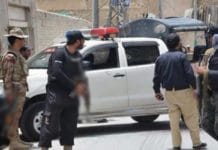
KOHAT, (APP): Grief, anger and concerns over KP Govt’s counterterrorism policy prevailed in Kohat after a suicide bomber struck a mosque in old Police Lines on Friday afternoon, killing at least 22 people, including 15 police personnel, and injuring 85 others in one of the deadliest attacks targeting law enforcement in the district in recent months.
The deadly attack has not only devastated the families of the victims but also reignited debate over the KP Govt’s anti terror policy and evolving security challenges facing Khyber Pakhtunkhwa, where police personnel continue to serve on the frontline against terrorism.
The today’s suicide attack on Kohat Police have raised serious questions over the KP Govt’s poor approach to curb terrorism in the province.
According to IGP Zulfiqar Hameed, the suicide bomber tried to enter the old Police Lines but was intercepted by security personnel guarding the entrance and killed all of them.
“The bomber detonated his explosive laden vehicle at outerwall of the mosque that caused the casultues.
Following the Kohat explosion, security was tightened across Peshawar and adjoining districts. Police, CTD personnel and other law enforcement agencies increased patrols around police stations, government offices, markets and other sensitive installations while snap checking was intensified at entry and exit points.
Senior police officials said all district police officers across Kohat, Hangu and Peshawar had been directed to review security arrangements at police stations, strengthen access control systems and enhance vigilance against possible follow-up attacks.
Syed Akhtar Ali Shah, former IGP Kp said the Kohat attack underscored the continuing threat posed by terrorist elements attempting to target police and security forces. He questioned that how the suspected terrorist had reached to the old police line and blew explosive vehicle?
He said police remain the first line of defence against terrorism and quipping them with armoured carrier vehicles was the main responsiblty of KP Govt. He said had CM KP not returned the weapons and armoured carrier vehicles to the federal Govt, these incidents may not have been occurred.
Akhtar Ali Shah said that Special Branch, an intelligence department of KP police needs to be strengthened while number of personnel of Elite Force and CTD should be increased.
“The response of police had prevented a much larger tragedy. However, evolving tactics of militants required constant review of security protocols, intelligence sharing and protective measures,” he said.
Outside DHQ hospital, anxious relatives waited for news of injured loved ones and policemen, many of whom remained in critical condition. Police officers embraced grieving colleagues while volunteers donated blood for the injured.
Funeral preparations began soon after the attack as thousands of residents from Kohat and adjoining districts gathered to pay tribute to the fallen personnel. For the bereaved families, the tragedy represents an immeasurable personal loss who demanded of KP Govt to take strict action against terrorism.
The martyred 15 policemen were also fathers, sons, brothers and husbands whose daily duties involved protecting communities despite persistent security risks in Kohat. Many residents described the policemen’s decision to confront the attackers before entered the police linez as an act of extraordinary courage that saved many additional lives.
Akhtar Ali Shah described the bombing as part of a broader strategy by terrorist organizations to undermine public confidence in state institutions.
“Terrorists deliberately target police because they represent the writ of the state and stand between militants and ordinary citizens,” he told APP.
He said the resilience demonstrated by police personnel in Khyber Pakhtunkhwa over the past several years had prevented militants from achieving many of their nefarious objectives.
“Our police have paid enormous sacrifices in the fight against terrorism. Every such attack is intended to spread fear, but history has shown that these sacrifices ultimately strengthen public resolve against extremism and terrorism,” he observed.
Akhtar Shah stressed that intelligence-led operations, improved inter-agency coordination and enhanced protection of vulnerable installations remain essential to preventing future attacks.
Security analysts believed these attacks highlighted the need to complement kinetic operations with stronger intelligence gathering, technology-based surveillance and community policing.
They said a comprehensive approach is required that combines effective intelligence, law enforcement, economic development, quality education and community engagement. They argued that unemployment, poverty, ideological polarization and social exclusion create opportunities for extremist organizations to exploit vulnerable youth.
“Investment in education, vocational training, infrastructure and employment generation is an investment in long-term national security,” the added.
Dr. Hilali also advocated strengthening traditional community institutions, including hujras, sports facilities, cultural activities and youth engagement programmes to counter extremist narratives at the grassroots level.
Political leaders across party lines condemned the kohat attack and emphasized the need for closer coordination between the federal and provincial governments. Pakistan Muslim League-Nawaz (PML-N) MPA Malik Tariq Awan said Pakistan had previously demonstrated that coordinated national efforts could significantly reduce terrorism.
“The massive gains achieved after implementation of the National Action Plan by the Nawaz Sharif Govt should be consolidated through sustained intelligence cooperation, institutional reforms and continued vigilance by KP Govt,” he said.
He added that police modernization, improved equipment, advanced surveillance technology and better training should remain priorities for strengthening counterterrorism capacity.
Across Kohat, shopkeepers, teachers, students, traders and community elders expressed solidarity with the families of the martyrs while demanding stronger protection for police personnel and public institutions.
Many residents said Kohatians had faced terrorism with steadfastness and courage.
“This attack is not only against the police; it is an attack on the peace that the people of Kohat struggled so hard to restore,” Salahuddin Bangashi a local elder gathered outside the funeral prayers.
Citizens urged authorities to enhance intelligence-based operations, improve coordination among security agencies and ensure that the planners and facilitators of the attack are brought to justice.
As funeral prayers concluded and mourners gathered at the homes of the martyrs, a shared message resonated across the valley that the sacrifices of the fallen police personnel and civilians must strengthen not weaken the nation’s determination to eliminate terrorism and secure lasting peace in Khyber Pakthunkhwa.
Despite profound grief, residents said they remained united with law enforcement agencies in rejecting terrorism and preserving the peace for which Kohat police and people has paid a heavy price today.