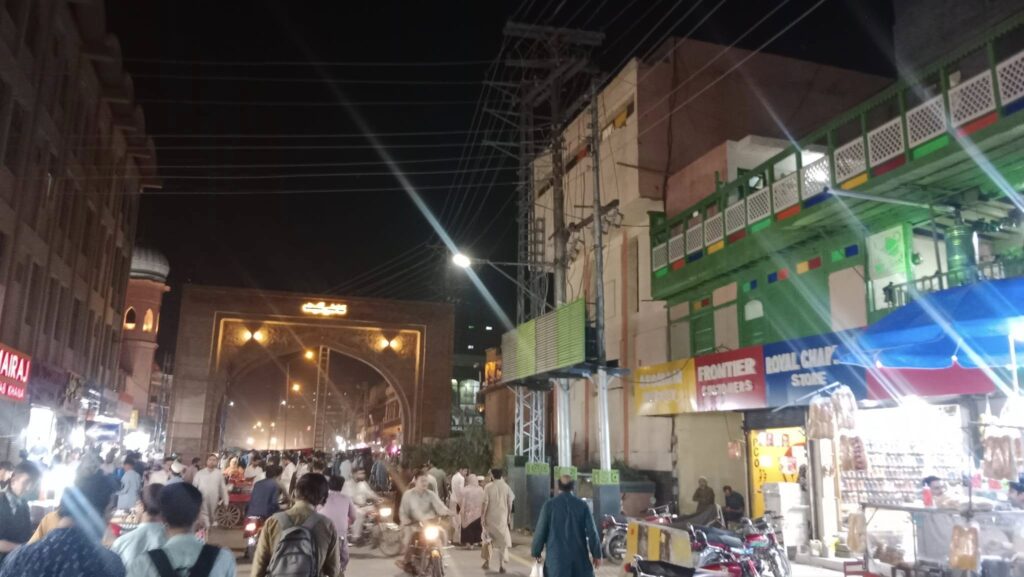
Peshawari Qehwa: A symbol of centuries-old tradition, alive at Qissa Khwani despite social media addiction
PESHAWAR (APP): Despite the widespread addiction to social media, the centuries-old tradition of enjoying Qehwa (green tea) remains vibrant in Peshawar’s iconic Qissa Khwani Bazaar.
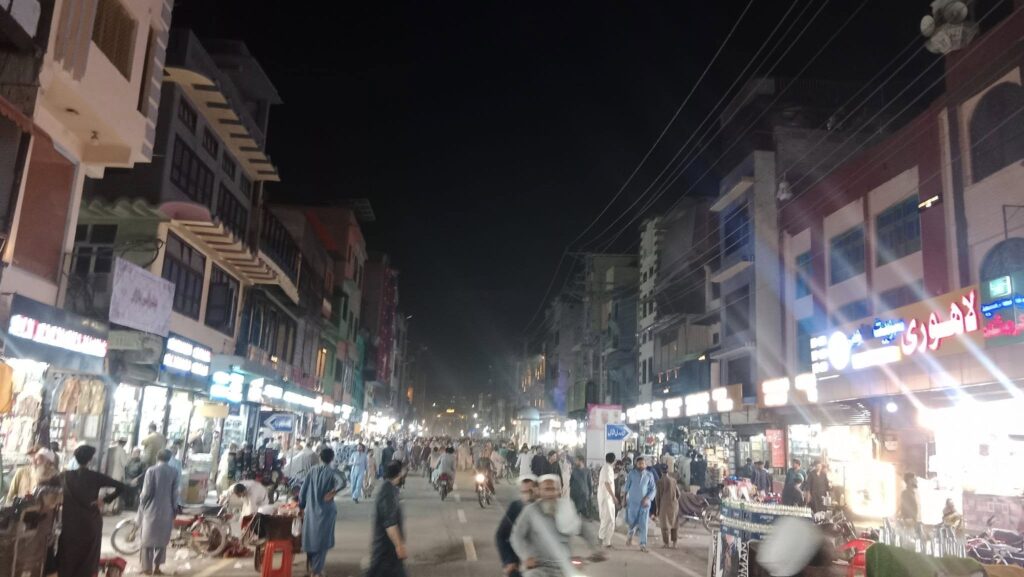
This historic market, known as the “Street of Storytellers,” continues to serve as a hub of foods with Qahwa for locals seeking warmth and connection on winter nights.
In a time when digital distractions dominate, the comforting ritual of sipping Qehwa offers a moment of respite, with patrons gathering to share stories and conversations that have been passed down through generations in its oldest Qehwa shops.
All the Qehwa Khana of Qissa Khwani that opened from morning till late night draw visitors in substantial numbers on Sunday where they exchanged views about politics, culture, sports and other socioeconomic matters in a relaxed cold weather .

Peshawar’s famous Qehwa which was helpful in digestion of varities of food help foodies after enjoying Chappli Kabab and Matton Karahi.
At Qisakhwani, plenty of shops of Chappli Kabab, Maton Karahi and Qehwa were opened for visitors till late night. “I came from Karak to enjoy the mouthwatering Chappli Kabab with traditional Qehwa with my friends,” said Waris Khan, who came with six school friends from Karak district told APP.
” I had visited many cities of Pakistan but the Peshawari Chappli Kabab along with Qissa Khwani bazaar’s Qehwa has impressed me the most,” he said.
Qissa Khwani bazaar is one of the oldest bazaars of South Asia where food shops, hotels, and Qehwa Khanas attract a large number of visitors enjoying delectable bites of BBQs, chappli kabab, paye, mutton karahi, fried fish, kabuli pilau and other traditional dishes from morning to till late night.
Known for international storytellers, Qisakhwani’s ancient Qehwa shops with traditional wood beds are its unique feature where visitors come in groups and with families for parties to enjoy the delicious cuisines.
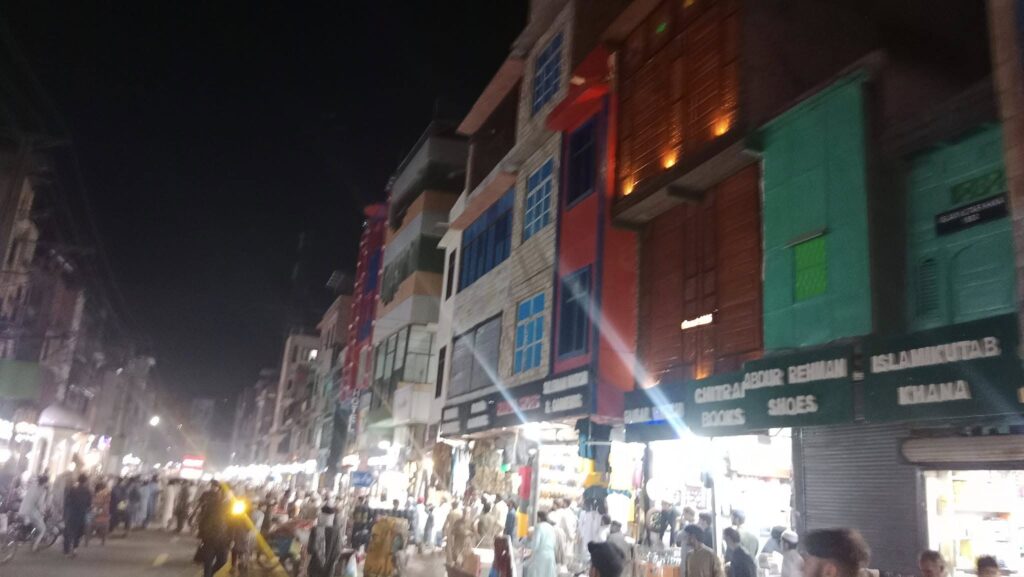
“I came along with family to my favourite Qissa Khwani to enjoy its famous chappli kebab and paye with its Qehwa on occasion of birthday of my son,” Fayaz Khan, a resident of Waoda Town Nowshera district told APP.
“Whenever I came to Peshawar, I try to come Qisakhwani to enjoy its delectable cuisines with its famous Qehwa,” he said.
“Peshawari Qehwa helps to give warmth inside his body and is a natural remedy for flu, and digestive problems,” he said.
Qissa Khwani Bazaar is located in the heart of Peshawar City near historical Chowk Yadgar, Ghanta Ghar and Balahisar Fort. It was a key trade and cultural centre where merchants from the subcontinent, Afghanistan and Central Asia had stayed at night and shared tales of love, culture, art and architecture, music and traditions, before their departure to their respective destinations.
Starting from Kabuli Gate, the bazaar takes visitors to the primordial age after witnessing its centuries-old architectural buildings, artisans’ shops, restaurants and Qehwa Khanas.
During its peak period, the bazaar served as a campground for trade caravans of merchants from Delhi, Amritsar, Lahore, Kabul, Dushanbe, Ashgabat and Tashkent, who used to enter the city’s gates to unload their merchandise.
Witnessed the vigour of great warriors, invaders and kings including Alexander the Great, Mehmood Ghaznvi, Zaheeruddin Babar and Nadir Shah, the bazaar also saw the power of King Ahmed Shah Durrani and his grandson Shah Zaman who marched through the famous Khyber Pass during their invasions of India.
Fazl Rehman, owner of the famous Mohmand Qehwa at Shah Wali Qatal Street at Qissa Khwani told APP that he had inherited the business from his father and associated with it for the last 55 years.
“Making Qehwa is my passion which I inherited from my father in 1969 when I was a child and my son has also joined us,” Rehman said. “Majority of his customers ask for Qahwa. However, Qahwa with milk — locally Known as Sheen Da Payo —was a special item for parties at Qisakhwani.”
The mouthwatering fried fish, chicken roast and kulfi-falooda alongwith the famous qehwa were adding colours to the parties here.
Rehman said that people still swap tales of culture, music, art, politics and traditional food in Qissa Khwani’s tea shops by enjoying the famous cousines with traditional Qehwa despite growth of social media till late night.
Following the creation of Pakistan, he said, the tea stalls of the bazaar became centres of political discussion where locals exchanged views about the country’s political situation.
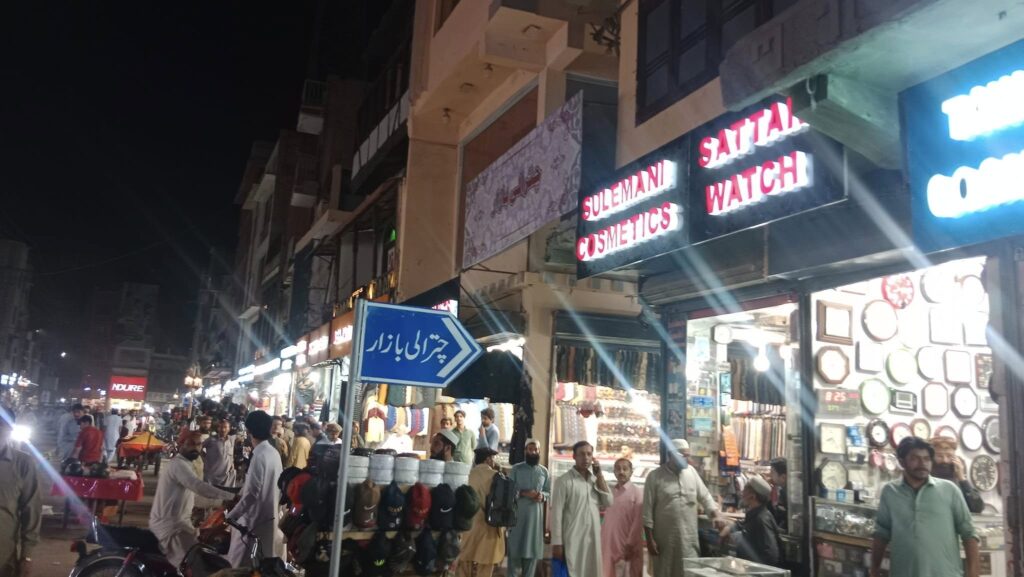
He recounted the elections between Fatima Jinnah and Gen Ayub Khan, 1965 Pak-India War, OIC Lahore Summit 1974, and a number of sports and cultural events including the 1992 cricket world cup as some of the most hotly discussed topics at the bazaars many tea shops and stalls.
Bakhtzada Khan, research officer Archealogy Department said that Qissa Khwani’s history is believed to be as old as the history of Peshawar. He said the recent archaeology excavation at ancient Gor Khatri established the city’s historical profile declaring Peshawar as ‘Oldest Living City’ in South Asia with a primitive history going back to about 539 BC.”
The Gor Khatri excavation is the deepest and biggest in the world, which revealed that the 20 layers of soil provide a complete profile of this ancient city ranging from British to pre-Indo-Greek era.
Thus, he said the unique tradition of storytelling and drinking of Qehwa became an integral part of Qissa Khwani culture since primitive era, which is still continuing despite social media onslaught.
Besides Qahwa, foreign and domestic tourists can also take glimpses of the ancestral houses of Bollywood superstars including Yousaf Khan alias Dalip Kumar at Mohallah Khudadad, Haveli of Raj Kapoor’s father Prithvi Raj and residence of Shah Rukh Khan’s family at Shah Wali Qatal Qissa Khwani.
The Haveli of Raj Kapoor’s father Prithvi Raj, who moved to Mumbai in 1930 where he prevailed over the South Asian film industry both as an actor and producer — laying the first Bollywood dynasty spanned about four generations — also serves as a major attraction for visitors at Dhaki Nalbandi near Qissa Khwani.
The house of Taj Muhammad Khan, father of Bollywood legend Shah Rukh Khan was located at Shah Wali Katal Qissa Khawani where his celebrated son had a good time with his family members.
The Qehwa shops confront of arched white marble monument erected in the middle of the bazaar to honour all those martyred in the Qissa Khwani massacre by British troops in 1930, also remained the centre of attraction for many.
British Commissioner of Peshawar, Herbert Edwards had a special love for Qissa Khwani who called it the ‘Piccadilly of South Asia’. During colonial rule, Britishers used informers to know public opinion over administrative decisions by instructing them to visit city areas and bring `Qissa Khawani Gazzattee’ and enjoyed Qehwa with Chappli Kabab.
“Qissakhwani had witnessed a sharp decrease in the arrival of tourists during 2001-13 when terrorists targeted this cultural hub of Peshawar that claimed so many precious lives including Senior Minister Bashir Ahmed Bilour in 2012 and CCPO Malik Muhammad Saad Shaheed in 2007” said Fazalur Rehman.
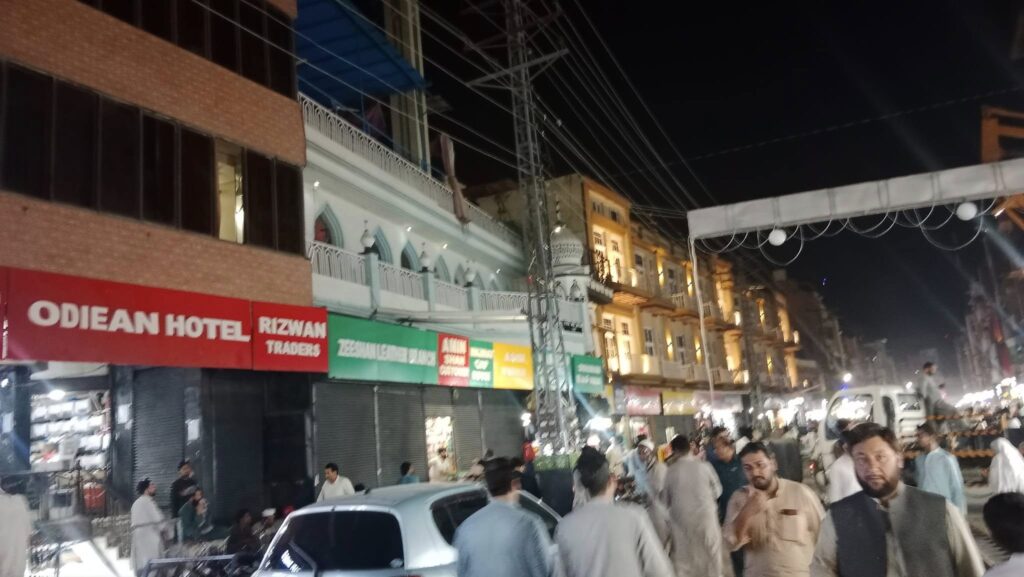
In spite of economic losses caused by terrorism and COVID-19, he said that its traders continued their business even in those hard days when people were afraid to visit this ancient bazaar.
“Qisakhwani is the identity of Peshawar and solid efforts are required to preserve its cultural heritage, architecture, artwork, and substantial revenue could be generated by maintaining its beauty and primitive heritage,” said Shaukat Ali Khan, Chairman Central Organization for Traders Khyber Pakhtunkhwa.
He said about Rs80,000 per 50kg are being spent on the import of green tea most of which comes from Vietnam.
Shoukat shared that this amount could be saved by facilitating investors and farmers to cultivate green tea in upper KP, especially in Malakand and Hazara divisions.
He urged the government to give special financial incentives to investors for the purchase of machinery for tea cultivation, harvesting, and the maintenance of Qissakhwani.
Khyber Pakhtunkhwa government has completed the ‘Cultural Heritage Trail” project in 2018 in Peshawar under which 500 meters long trail from ancient Ghanta Ghar to Gor Khatri and the outlook of 85 heritage buildings including the famous Sethi House at Mohalla Sethian near Qissa Khwani were renovated and preserved.
Starting at historical Ghanta Ghar, the trail passes through ancient Mohallah Sethian with a number of beautiful houses constructed by the Sethi family back in the 1880s that were preserved.
The experts underlined the need of highlighting such rich traditions and historical places through digital media to attract foreign tourists and contribute in the country’s economic growth.