Chitral Airport, an untapped asset of Pakistan – By: Dr. Mir Baiz Khan

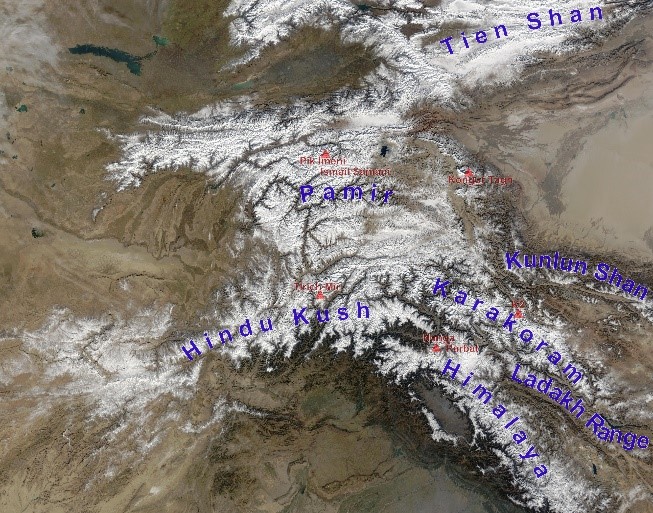
Chitral’s geographical location is uniquely situated on the northwestern border of the country. It is a border region of the KPK province. While an integral part of Pakistan, Chitral has a common border all along eastern Afghanistan. Historically and geographically, the region is a bridge between South and Central Asia. It is a gateway to the heart of Central Asia from its northern side and to the mainland of South Asia from its southern side. As the picture below shows that Chitral is situated in a central location surrounded by a vast region overarched by the world’s greatest mountain ranges, the Hindu Kush in the west, the Karakoram and Himalaya in the east, and the Pamir in the north. It is a region dominated by majestic mountains all over the region and beneath them are the deep green valleys, gorges, rivers, glaciers, and pasturelands. Along the rivers are the hamlets, the towns, and the cities with populations from a few households to several thousand depending on the size of the village and town. While historically, these mountains have kept numerous communities isolated and also protected them from being overwhelmed by external influences. However, the travelers, pilgrims, traders, and preachers since ancient times brought their cultural elements to Central Asia’s big centers and then gradually spread them to other smaller towns and villages and got integrated into the indigenous cultures and traditions.
Central Asia is a museum of languages, cultures, and places of interest for nature lovers, travelers, mountaineers, tracking enthusiasts, and many more. It is a region where ancient civilizations flourished leaving behind their indelible imprints in terms of material cultures like statues, stupas, temples, shrines, or ritual implements and memories of the roots of their ancient ancestral religious and cultural traditions whether Zoroastrian, Manian, Buddhist or indigenous Shamanistic practices. Then, the monuments of the Muslim civilizations with richly decorated traditional buildings, and the religious-cultural traditions are expressed through calligraphic devotional writings and geometrical designs of bricks and ceramics. The immense variety of poetic and musical traditions with a tantalizing attraction for everyone who loves music is a treasured source to explore for those who are either artists or researchers or both. Chitral since ancient times has been an integral part of the Central Asian cultural tapestry until the first quarter of the twentieth century when Russian-led communism swept through the heartland of Central Asia.
Another important historical fact reflected in Chitral’s proximity to the core of Central Asia is its indigenous communities. The numerous ethnic groups identify themselves as qowm in most cases trace their ancestry from different parts of Central Asia, such as modern Afghanistan, Tajikistan, Uzbekistan, Turkmenistan, Kirgizstan, China, and so on. From the turn of the 19th century with the arrival of the Indian British Empire administration and political office in Chitral, its demography began to be influenced by the migrants from the south as civil servants, military personnel in the Indian British army, and traders. Thus, the Chitral Bazar (market) was created and over the years, the market expanded mostly be non-Chitrali shopkeepers from the Northwest Frontier Province (renamed Khyber-Pakhtunkhwa). The arrival of new immigrants settling mainly in Chitral town and its suburbs was an addition to the existing demographic diversity. With increasing, land and air connectivity, not only Chitralis will aspire to visit their ancestral lands since the memories of the past are still intact through poetry and music and local dialects but also through such development Chitral will be the shortest distance both by land and by air for the leisure tourists from the mainland of the country.

While the majority of tourists may prefer to travel by road with friends and families to experience the landscape, its flora, and fauna on the way, and enjoy the rivers and lakes with trout fishes jumping up in the hot weather, and stopping at places where to enjoy cold spring water which is purer than the purified through treatment. However, many people such as government officials, businessmen, professionals, and others who would like to save time for different reasons can take the air route to various destinations for a short trip of a day or two or a week which would be shorter than the distances in the domestic flight destinations in the country. For example, in the Badakhshan province of Afghanistan which is contiguous to Chitral all along from its southwestern most to the northeast end, there are six airports. From Fayzabad, the main provincial airport, to a dozen airports, it takes less than an hour by flight. Furthermore, the flight from Fayzabad, Badakhshan of Afghanistan to Dushanbe, Tajikistan the estimated time is only 46 minutes, and to Tashkent, Uzbekistan it takes only two hours and fifty minutes. Flights from Chitral Airport to all these destinations will take less than three hours. It is an opportune time to look at the possibilities of paying serious attention to improving the condition of the airport and the quality and volume of its operation.
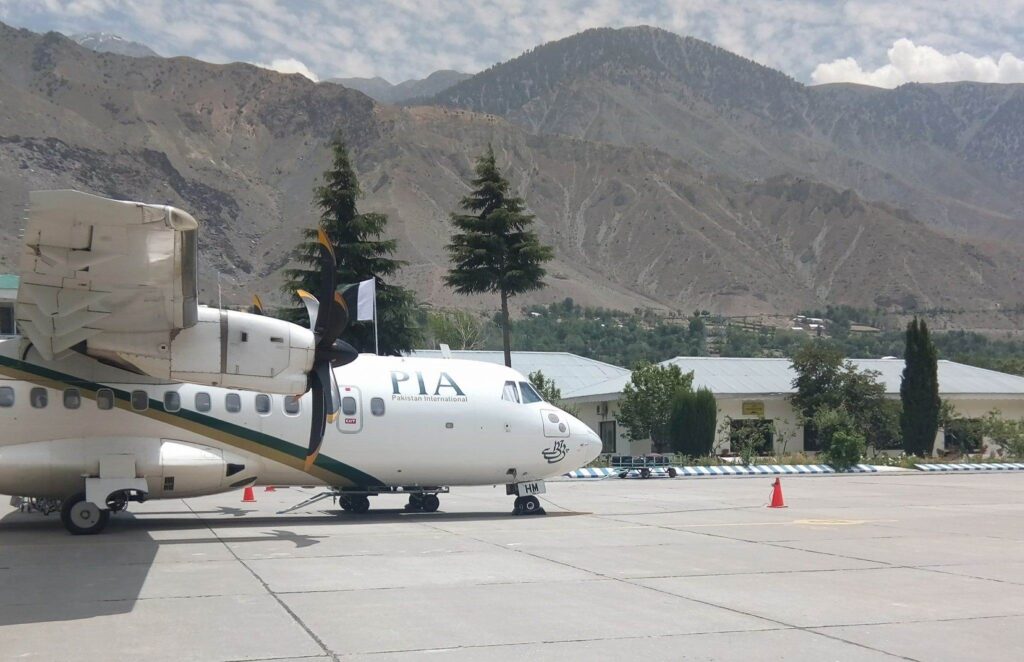
Chitral Airport has not received serious attention since it became operational in 1966. Its condition is worse today than it was then. On December 1, 2003, Dawn published a short editorial describing the abysmal conditions at the Chitral Airport. It stated that the congested single briefing counter makes it difficult for the passengers during the security checks. Referring to cleanliness and poor maintenance of the waiting lounge, the article characterized the airport condition as speaking ‘volumes about the apathy of the authorities concerned.’ It went on to state that the CAA ‘has also started charging entrance and parking fees from the vehicles entering a small kutcha [mud] ground on the premises of the airport without providing any facilities to motorists in return.’ The editorial concludes that the airport authority ‘has failed to provide and improve basic facilities at the airport.’ The Chitral River has cut the soil of a huge area on the landing pitch side of the airport over the years, which can be added to the airport extending its runway if the washed-away land is reclaimed and protected. The area is flat, the river flow is smooth and slow, and channeling the river with a protective embankment is not a farfetched idea given the heavy construction machinery being available. The question is the political will of the leadership at the local, provincial, and federal levels. Sadly enough, the washed-away land space is left to the individual hunters who spent a substantial amount of money every year in building large ponds to attract the migrating ducks to be wiped out on their arrival.
On the PIA operational side, the picture is not promising either. The airline, a dream to serve the nation at large, came into being on the advice of the Qaid-e Azam Muhammad Ali Jinnah. It has been the carrier of the national symbol on the body of its aircraft since its inception in the country, seventy-five-plus years ago. PIA’s commitment was to make different parts of Pakistan accessible by air, not only the cities but also, more importantly, the far-flung areas of the country’s mountainous regions where other means of transportation were meager or non-existent. Chitral, because of its location in the middle of the Hindu Kush Mountain ranges was one of the most isolated regions on the northwest border of Pakistan. It would remain cut off from the rest of the country for six months due to the avalanches and winter-storm on the snow-clad Lawari (or in the local language lawrai) Pass, where many lives would be lost every year since the opening of the road over the pass in the late nineteenth century.
With the opening of the Lawari tunnel, the hope was that by having two modes of transportation, Chitral will leave behind its centuries of isolation and challenges of connectivity, particularly in times of urgency. Furthermore, it was hoped that by being connected by air and land, Chitral will leap to become a booming tourism destination. That did not happen because neither the tunnel turned out to be all-weather nor the PIA operation remained trustworthy. However, the transportation situation to and from Chitral has greatly improved with the opening of the tunnel, and means of alternative transportation such as bus and van service and taxi availability have increased. But the core issue remains, that is, before passengers got stranded when the Lawari Pass was closed due to heavy snow and associated risks and PIA with its regularly scheduled flights, at times attempting two or three times and increasing its flights, could evacuate those passengers who are desperate for health or other emergency reasons. Now when the tunnel is closed and PIA scheduled flights are unreliable, perhaps less due to weather conditions and more consideration of profitability, passengers, even those with emergency needs, get stranded.
PIA has committed to the nation wherever its citizens live to serve them because of the status given to it by assigning its national symbol, and also as a recipient of large amounts of state subsidies in times of crisis. If it is at a minor loss to operate in isolated regions like Chitral, it is expected to make a handsome profit in its domestic flights to big cities and its international flights. If flights to Chitral need subsidized fares as it has been, it is not unusual. The shortfall in bringing efficiency to airport management and reliable flight operation can lead to an increase in demand to fly out for many who prefer to save time in traveling. The increase in the number of visitors for leisure, work, or business over time will offset the deficit. Whether PIA remains a state-owned corporation or is privatized its ownership, its original commitment to serve the isolated parts of Pakistan will remain intact as long as it displays the national symbol of Pakistan on the body of its aircraft.
The political leadership of Chitral has a responsibility to make sure that the Chitral Airport is an invaluable asset for the region which must be protected, developed to modern needs, and promoted as a regional hub for air trafficking within and beyond the national boundaries. If this is achieved that will lead to the possibility of attracting tourists from all over the world and investors in the leisure industries to this unbelievably mesmerizing mountain society which will uncover innumerable opportunities for economic and social development, the treasures that are still unknown and untapped.