As rainbows brighten Swat’s skies, ecotourism open gates of employment for youth
SWAT (APP): As dark monsoon clouds drifted over Swat’s emerald valleys on Monday afternoon before breaking into sunshine, nature staged a breathtaking spectacle that left thousands of tourists spellbound and breathed fresh hope into the lives of local families who depend on tourism.
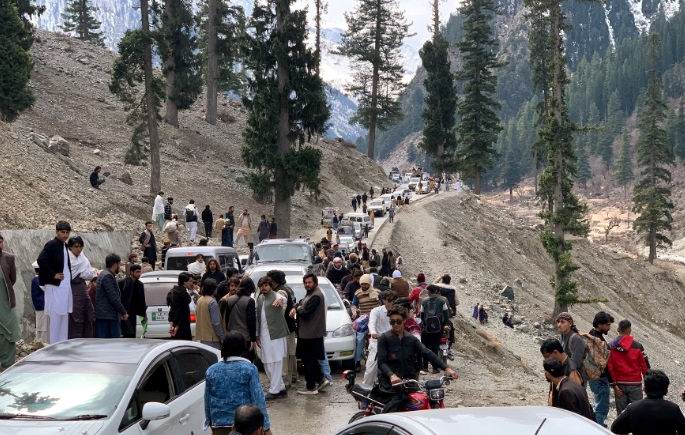
The refreshing spell of rain, followed by bursts of golden sunlight, transformed Kalam, Malam Jabba and Osho valleys into a living canvas of mist-covered mountains, sparkling streams and lush green meadows, offering great opportunties for tourists to explore.
Brilliant rainbows arched across the sky over Kalam and Mahudhand lake as sunlight pierced through the clouds, creating postcard-perfect scenes that drew visitors from hotels, restaurants and roadside cafés.
Children laughed and danced in the drizzle while families posed for photographs against the dramatic mountain backdrop at Kalam and Mahudhand lake amid boats rides.
Adventure lovers and photographers crowded viewpoints to capture the fleeting beauty of rain-soaked forests, crystal-clear rivers and clouds embracing towering peaks.
For tourists escaping the relentless summer heat of Pakistan’s plains, the weather offered more than relief and it delivered an unforgettable experience.
But beyond the mesmerizing scenery of upper Swat, the rainfall of high intensity coupled with cold winds carried a deeper significance for the people of Swat.
For many local families, every arriving tourist from KP, Punjab and other provinces represents an opportunity to earn an honest livelihood in dignified manner.
Standing outside his modest family-run guest house, local tourist Samad Khan welcomed visitors with homemade food and chilled drinking water, his face reflecting both gratitude and optimism.
“The arrival of tourists is a blessing for us,” he said. “Every visitor helps dozens of families from hotel owners and transporters to shopkeepers and food vendors.”
Like many young entrepreneurs in Swat, Samad has converted part of his ancestral home into a small guest house during the busy summer season. The additional income helps support his family while offering tourists affordable accommodation and warm local hospitality.
A few kilometres away, Ataullah Yousafzai, a photographer cum horse rider shared a similar story of resilience and hope.
Once unemployed and struggling to support his family after marriage, he found an unexpected opportunity in tourism after following his grandfather’s advice to open the two spare rooms of their home to visitors.
“No one understands the hardships of an unemployed married man better than me,” Ataullah said. “Instead of waiting endlessly for a job, my grandfather encouraged me to reserve two room to welcome tourists into our home. Today, by the grace of Allah, I earn enough to support my household.”
Charging only Rs3,500 for a full day’s stay while providing meals and drinking water free of cost, Ataullah believed that genuine hospitality encourages visitors to return to Swat.
“Our guests leave satisfied,” he said with a smile. “Many promise to come back with their families and friends.”
Across Kalam, Madian and nearby villages, similar stories are unfolding with hope and economic resilience. Homes that once stood quiet now welcome visitors during the summer season, creating employment opportunities for young people and providing additional income for families.
In upper Swat, Govt provides loans to local to reserve or construct rooms for stay of tourists that brought positive effects on tourism.
The pleasant weather also delighted visitors like Waris Khan from Karak, who travelled to Kalam to escape the intense heat.
“I came here to enjoy the cool weather and peaceful environment,” he said. “The hospitality of local people is remarkable. Family guest houses are affordable, and visitors can enjoy trout fish, river rafting and paragliding without spending a fortune.”
Tourism stakeholders believed the timely rainfall, combined with the ongoing summer vacation season, could significantly boost visitor numbers in the coming weeks, bringing much-needed economic activity to the valley.
Experts said Pakistan possesses enormous tourism potential, from snow-covered peaks and lush valleys to archaeological treasures, deserts and religious heritage sites. However, they stressed that the country’s share in the global tourism economy remains modest because many destinations remain under-promoted internationally.
Muhammad Ali Syed, Manager of the KP Tourism and Culture Authority, said digital platforms have become essential for showcasing Pakistan’s diverse attractions to the world.
“We have magnificent valleys, skiing destinations, rivers, hiking trails and cultural heritage,” he said. “We need to project these destinations more effectively through digital media while continuing to provide a safe and welcoming environment for tourists.”
Economists and tourism experts also believe that stronger digital marketing, improved infrastructure and sustained investment in tourism services could generate thousands of jobs, particularly in rural communities where tourism directly supports local businesses.
As evening descended over Swat, clouds slowly lifted from the mountains, revealing emerald meadows washed clean by the rain. The fading sunlight painted another rainbow across the valley, drawing yet another wave of visitors with mobile cameras in hand.
For tourists, it was a magical summer memory during early moonson in Swat.
For families whose livelihoods depend on every visitor, it was something even more valuable that is a reminder that nature’s beauty continues to nourish both the soul and the local economy.
With rain-soaked valleys shimmering beneath the summer sun, Swat once again proved why it remains one of Pakistan’s most cherished destinations, where every changing season brings not only breathtaking landscapes but also renewed hope for the people who call these mountains home.
File Photo