Beekeeping marred by climate change induced weather patterns in KP
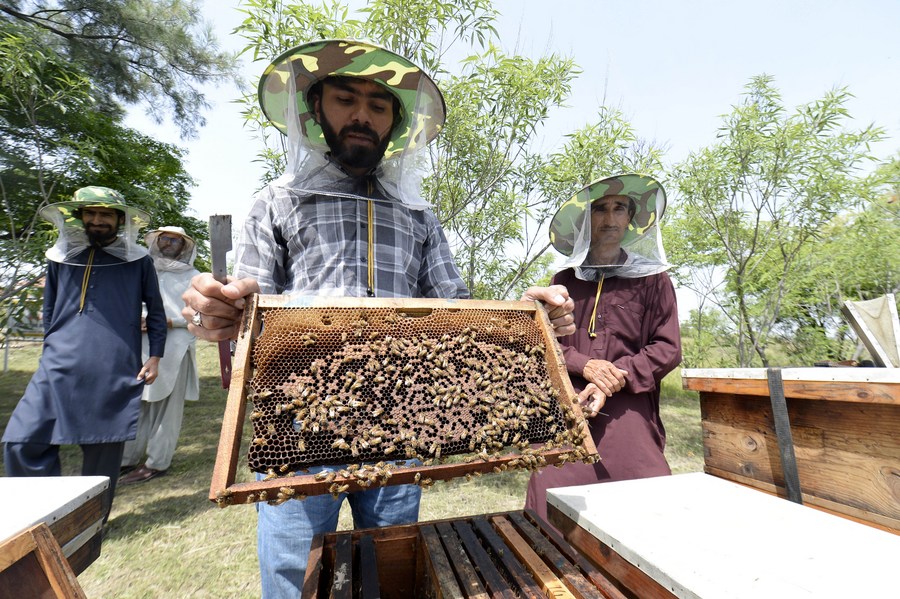
PESHAWAR (APP): Fixing steelnail in wodden beesboxes under a shadow of shisham tree on the bank of River Kabul, Ataur Rehman–a poor beekeeper is making determined efforts to repair it before the sunset.
Wake up early in the morning, the motivated beekeeper visited his farmhouse constructed at north side of bank of river Kabul in Nowshera where he began fixing steelnail to repair 100 beesboxes that were badly damaged by the last month torrential rains and floods.
Enjoying “Dil Dil Pakistan” national song through his mobil set with co beekeepers, Ataullah was busy like a honeybees in his work to repair all damaged boxes before disappearing of the sun behind Kohe Hindukash mountains terrains.
Unaware of the black tea brought by son being cold, Ataur Rehman said the recent torrential rains and flash flood in River Kabul has brought substantial economic losses to beekeepers of Nowshera, Charsadda and Peshawar districts, who were now looking for KP Govt assistance.
“I was living a happy life until the last month torrential rains and floods have badly damaged my 100 bees boxes, and was eagerly looking towards the KP government for financial assistance help to relaunch my climate change hit business,” he told APP on Sunday.
He abandoned education after death of his elder brother Hidayatur Rehman due to cancer and entered the stinging business of beekeeping to support own and brother family during unprecedented price hike in Khyber Pakhtunkhwa.

“My entire family was in deep shock after the death of my brother leaving six children and I had no idea what to do? However, I recollected myself and started this painsticking business on the advice of my mother,” he said.
“Initially, I purchased 30 bee-boxes and by the grace of Allah Almight, it increased to 120 boxes within two years due to my
consistent hard work and dedication,” he said.
“As the flood struck my village, our entire family rushed towards River Kabul’s farmhouse to shift bees boxes to safer places, but within moments we saw ourselves stranded in floodwater that badly damaged my 100 boxes and swept away 20 others.”
Claiming to have suffered Rs six lakh loss, the embattled beekeeper said he would restart his business soon after repair of boxes and arrangements of new bees colonies. He demanded of provincial government to give interests free loans and fix honey rates so that the rains and floods hit beekeepers could benefit from their labour.
Ataullah was planning to go to Punjab and Azad Kashmir where abundance of bee-flora plants were available for bees to increase honey production.
Sher Zaman, General Secretary of the All Pakistan Beekeepers Association, said the recent torrential rains and flood had adversally affected beekeeping industry in Khyber Pakhtunkhwa.
“The torrential rains and subsequent flash flood had caused substantial economic loss to the beekeepers, exporters and honey traders and the loss could hardly be overcome without the support of government,” he added.
Demanding compensation for the floods affected beekeepers, he said about 7,000 to 10,000 honey farms existed in the province and if compensation
and loans were not provided, more than 100,000 people associated with
bee farms in the province may be faced with starvation.
He said demand of Pakistani honey is always on the rise in Gulf states,
particularly Saudi Arabia and UAE due to its better quality and low sugar contents and the country’s economic woes may be addressed by promoting beekeeping.
He said Pakistani honey is a preferred in the Middle East to that of other countries due to its better quality and urged government for provision of interest-free
loans under Islamic banking system to encourage the beekeeper
community and climate change affected beekeepers.
“The climate change has also affected the local bee population scientifically known as Apis florae (small bee) due to loss of
bee-flora plants,” an official of Agriculture Research Institute (ARI) at Tarnab, Peshawar.
Besides floods, he said one of the reasons in its decrease could be the presence of two queens in the same bee-box or colony as the younger queen often kills the eldest or the latter leaves the bee-box or colony taking some of bees with herself.
However, he says there is every possibility of loosing an average of fiive to ten kg out of 1000 kilogram of honey production if preventive measures are not taken for their preservation and protection.

“There is a possibility of losing the wild bees in future if proper attention was not given to their preservation and management of natural forest,” said Dr Mumtaz Malik, former chief conservator of
Khyber Pakhtunkhwa Wildlife Department.
“Wild bee is a big source of quality honey that needs proper strategy and mechanism to get maximum production and protection from flood and torrential rains,” Dr Malik said, adding that honey business could be
developed as a non-wood-forest product for the locals living near forests to raise their income through preservation of wild bees population.
He stressed the need on capacity building of beekeepers to face any situation like flood and raising nurseries of bee-flora plants for promotion of honey industry.
Dr Mumtaz suggested issuance of cards to beekeepers for their identification while
migrating from one district to another in the wake of climate change weather patterns.
He said focuse on conservation of Apis Dorsata (wild bee) should be made as it has the ability to produce 35 to 40 kg honey from each comb, adding that the wild bees usually made their nests in tall
trees or buildings in reserved forests.
Iftikhar Khalil, former director non timber forest products KP said data of rains affected beekeepers may be collected for financial assistance.
He said rains and floods have also affected beekeepers most in Swat, Charsadda, Tank, DI Khan and Charsadda.
Iftikhar said that about 1,50,000 wild bees
remain busy in one-metre long and a half metre wide comb on 1-20 degree angle.
He said Pakistan has huge potential of producing over 7,500 to 8,000MT honey from about 300,000 colonies per year and diversion of financial resources to climate change’s mitigation was need of the hour.
Admitting climate change’s effects on the population of Apis Flori and Apis Dorsata commonly known as “Swat bees”, he said Apis mellifera was imported from Australia in 1977 owing to her speedy growth and increased power of honey production.
A research project was launched at Agriculture Research Institute Tarnab, Peshawar, Faisalabad and National Agriculture Research Centre Islamabad in 1979 to analyze mellifera’s properties.
“Mallifera produces about 20 to 25 kg honey per box against six to eight kg by native bees two times in a year.”
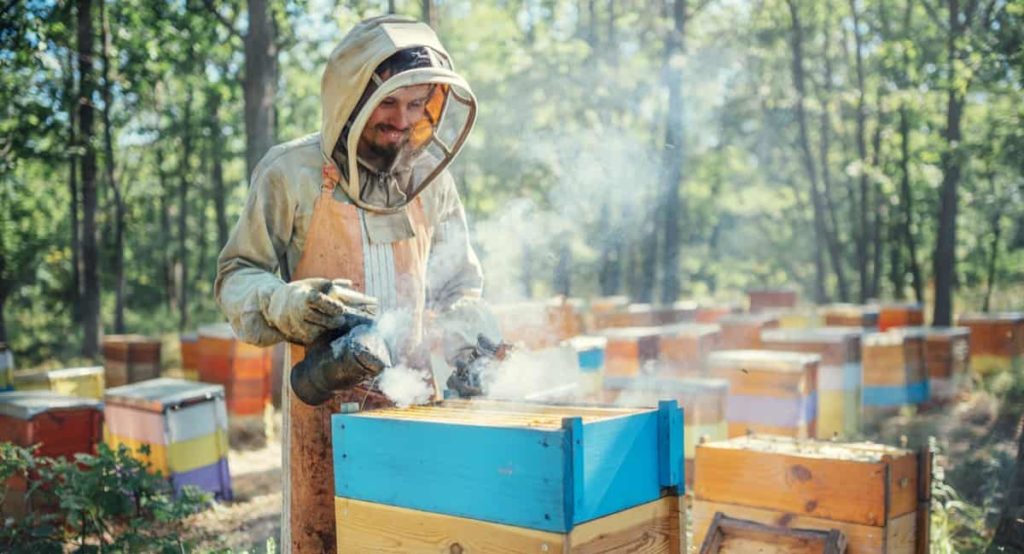
Apis Dorsata has an ability to produce 40kg to 45 kg honey from each hive mostly in tall trees and buildings,” he said, adding around 120,000 to 150,000 wild bees were busy in one meter-length and half-meter wide comb making 120 degree angle and their honey generation powers affected in case of torrential rains and floods due to loss of plants and destruction of their hives.
“The bees collect pollen and nectar within a five-kilometer radius of their hives and the majority prefer to get food while staying close to their combs. One bee produces 1/12th of a teaspoon of honey in her life and flapping their wings 11,000 times per minute besides using her tiny hairs to take pollen and stomach to carry 70mg nectar.”
Iftikhar said honey bees were the lifeline of Pakistan as they play 80pecent percent of the pollination process besides making a significant contribution in food chain and life saving medicines and its protection from floods was equally important from floods.
He said about Rs 43 billion revenues could be generated and over 100,000 new jobs to be created after achieving 70,000MT honey target, adding 10,009 exotic bees has a potential of producing 100 tons honey per year with financial benefits of Rs75 million.
Annually, he said 10 tons of honey can be produced from indigenous bees with annual economic benefits of Rs38 million and collectively Rs113 million income from the beekeeping sector in KP.
He said about 5.2 million ber trees could be planted in Karak, Kohat, Bannu, Lakki Marwat, Tank and DI Khan districts.
A new type of honey “Margalla” was introduced by Pakistan Council of Agriculture and Research (PCAR) mostly useful for asthma and allergy patients while “Ber and Kalongi” honey was also brought in markets keeping in view of its numerous health benefits.